Drying Technology with Vacuum Pumps

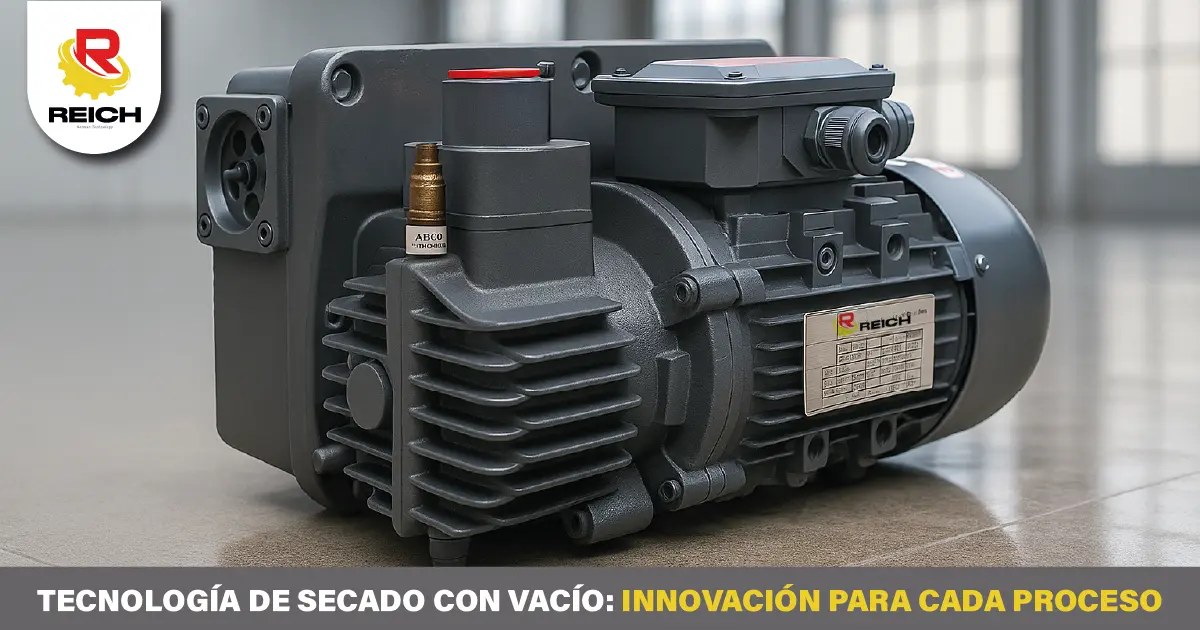
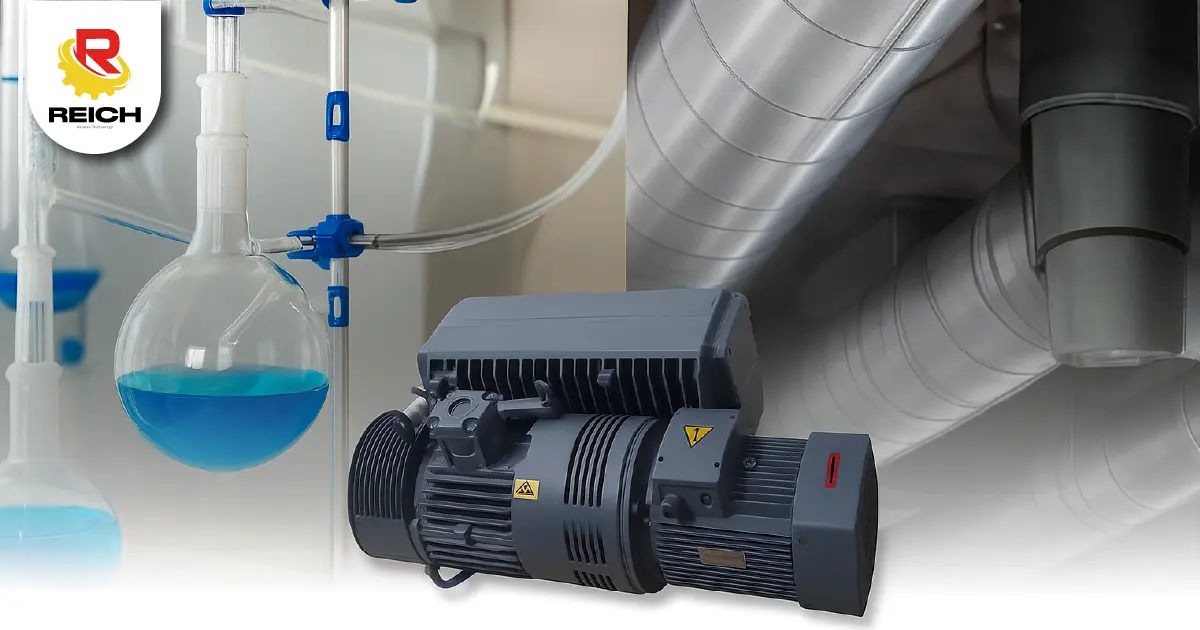
Vacuum pumps play a crucial role across multiple industries. By reducing pressure and controlling temperature, they accelerate moisture removal without compromising product quality.
There are six main vacuum drying methods, each suited to specific applications, enabling more efficient, safer, and production-optimized results.
1. Conventional Methods
Vacuum Oven Drying:
Heat is applied through conduction or convection, evaporating moisture at low pressures. Rotary vane, scroll, and booster blowers are commonly used, operating at 1–50 mbar.
Autoclave Vacuum Drying (Indirect Thermal Contact):
Moisture is removed by applying vacuum combined with steam or oil heating. Rotary vane and liquid ring pumps are used at 10–100 mbar.
2. Lyophilization and Related Methods
Freeze Drying (Lyophilization):
After freezing, solid water sublimes directly under high vacuum. Operates at 0.01–1 mbar using rotary vane pumps, blowers, and diffusion or turbomolecular boosters.
Foam-Mat Vacuum Drying:
The liquid is foamed to increase surface area, then dried under vacuum. Rotary vane pumps are used at 5–50 mbar.
3. Combined with Energy Sources
Microwave Vacuum Drying:
Microwaves heat the material internally, and vacuum accelerates evaporation. Rotary vane pumps with booster blowers are used at 10–30 mbar.
Infrared Vacuum Drying:
Infrared energy heats the product directly at low pressures, minimizing oxidation. Rotary vane pumps operate at 10–100 mbar.
4. Mechanical Vacuum Drying
Vacuum Press Drying:
Combines mechanical pressing and vacuum. Pressure removes free water, while vacuum evaporates it. Liquid ring and rotary vane pumps are used at 50–200 mbar.
Rotary Vacuum Dryer:
A rotating drum mixes materials while heating indirectly under negative pressure. Liquid ring and rotary vane pumps are used at 20–80 mbar.
5. Surface or Conveyor Drying
Vacuum Drum Drying:
Material is spread in thin films on a heated drum under vacuum. Rotary vane and liquid ring pumps are used at 10–40 mbar.
Vacuum Belt Drying:
Liquid or pasty products move over a heated belt inside a vacuum chamber. Rotary vane pumps and booster blowers are used at 1–30 mbar.
6. Particle or Fluid Drying
Vacuum Fluidized Bed Drying:
Low pressure fluidizes grains or powders, speeding up evaporation without high temperatures. Rotary vane pumps and boosters are used at 1–20 mbar.
Vacuum Spray Drying:
The liquid is atomized into microdroplets inside a vacuum chamber. Rotary vane pumps and blowers are used at 1–50 mbar.
Choosing the Right Vacuum Pump
Selecting the proper vacuum pump depends on the required vacuum level, the amount of vapor generated, and the purity needed:
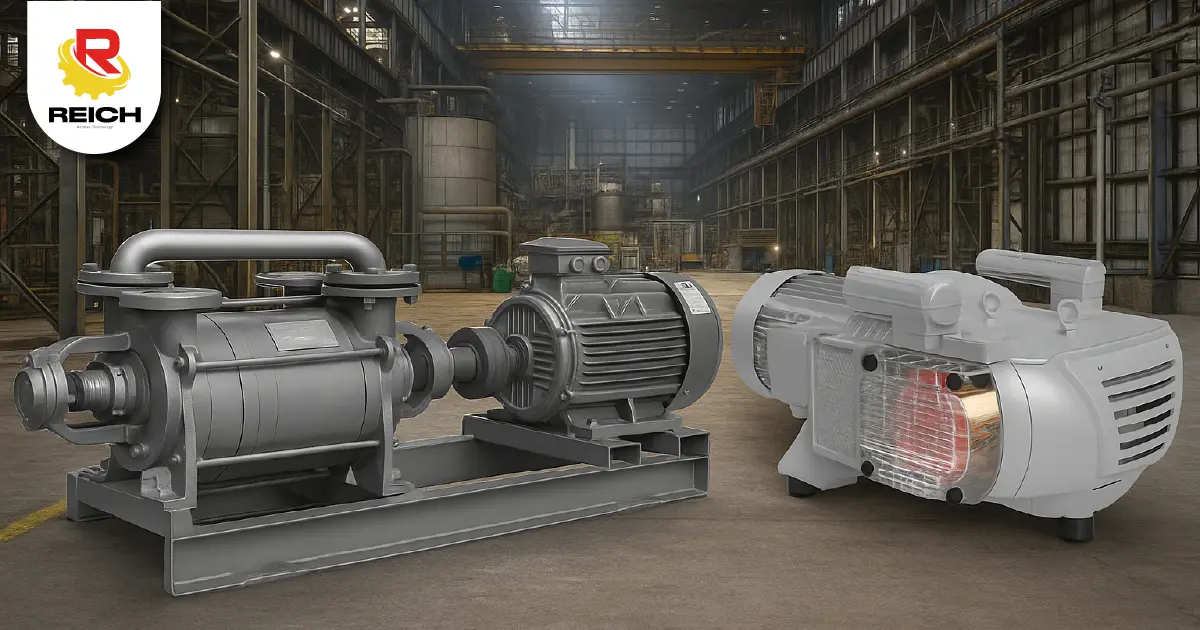
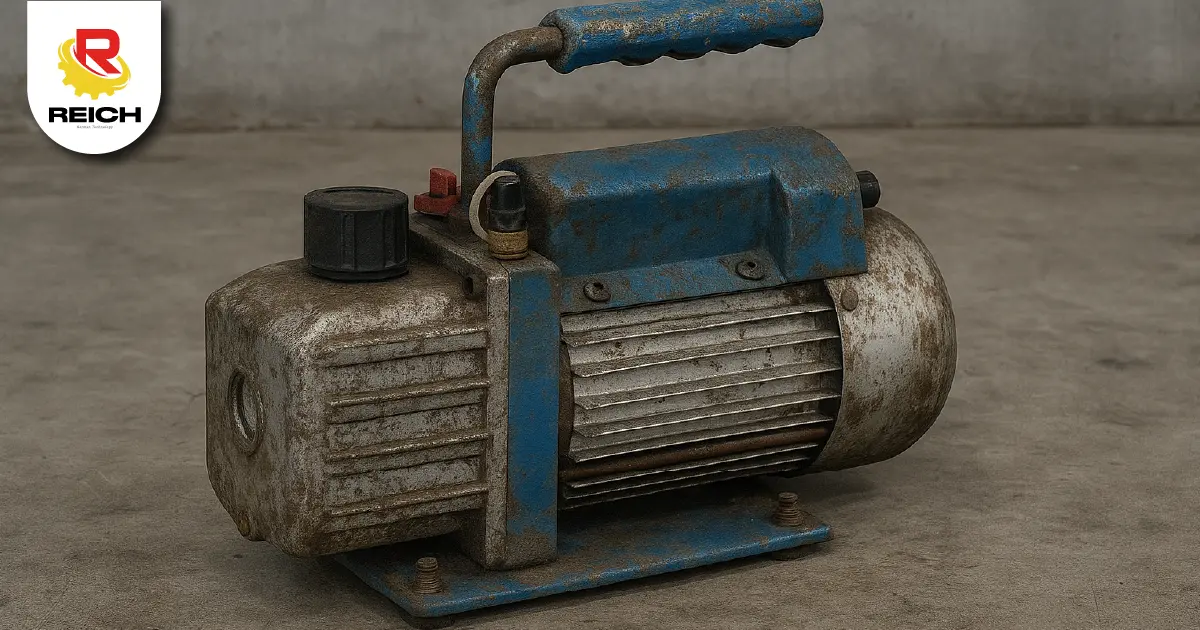
- Rotary vane pumps: most common and versatile for medium vacuum.
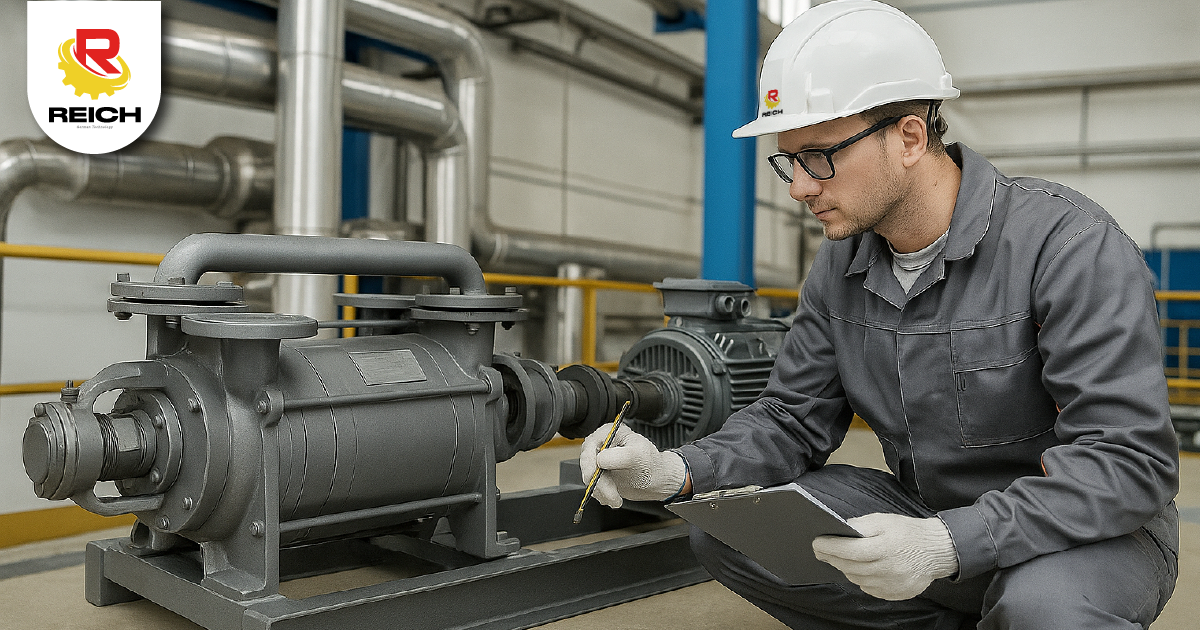
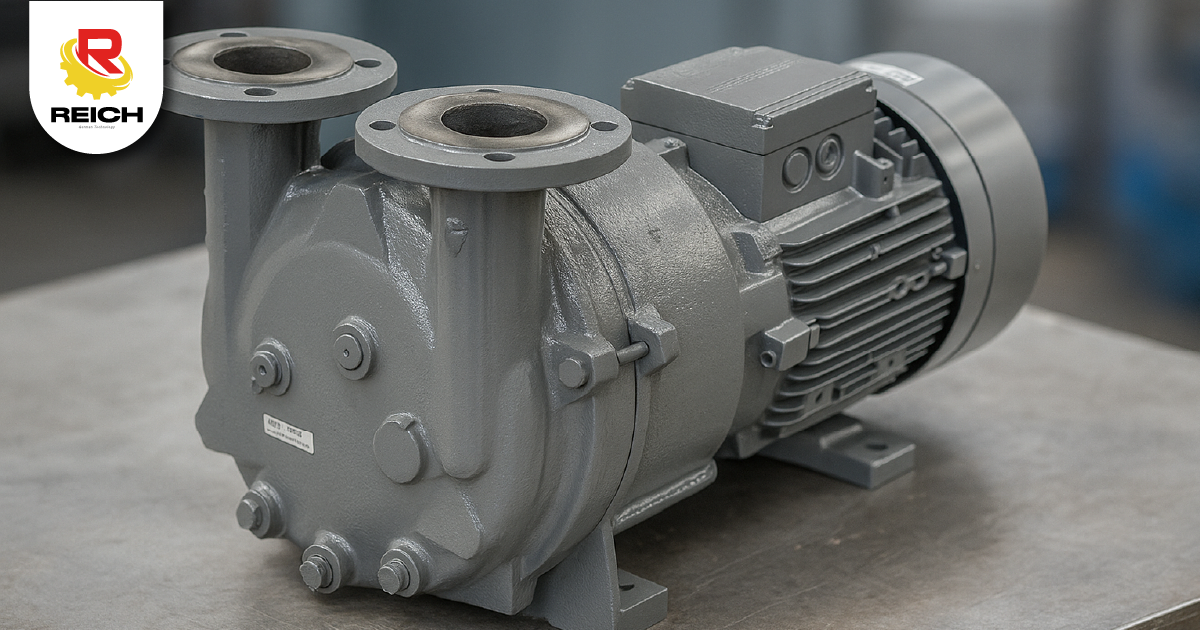
- Liquid ring pumps: ideal for large vapor volumes or condensables.
- Roots boosters: combined with other pumps to achieve deeper vacuum and higher flow rates.
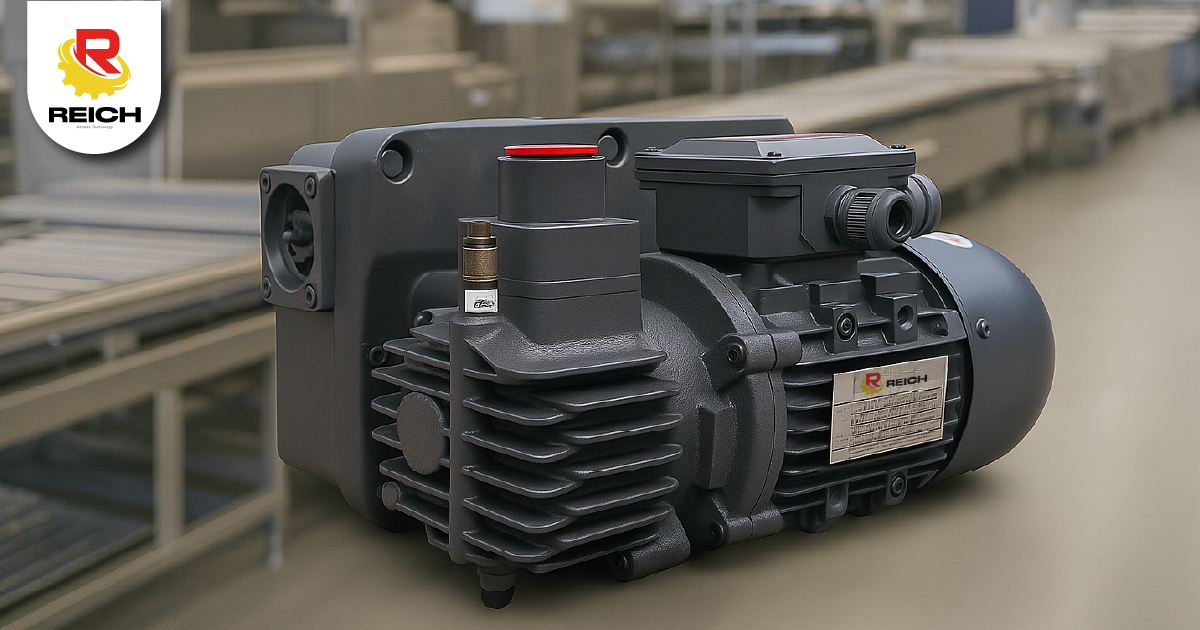
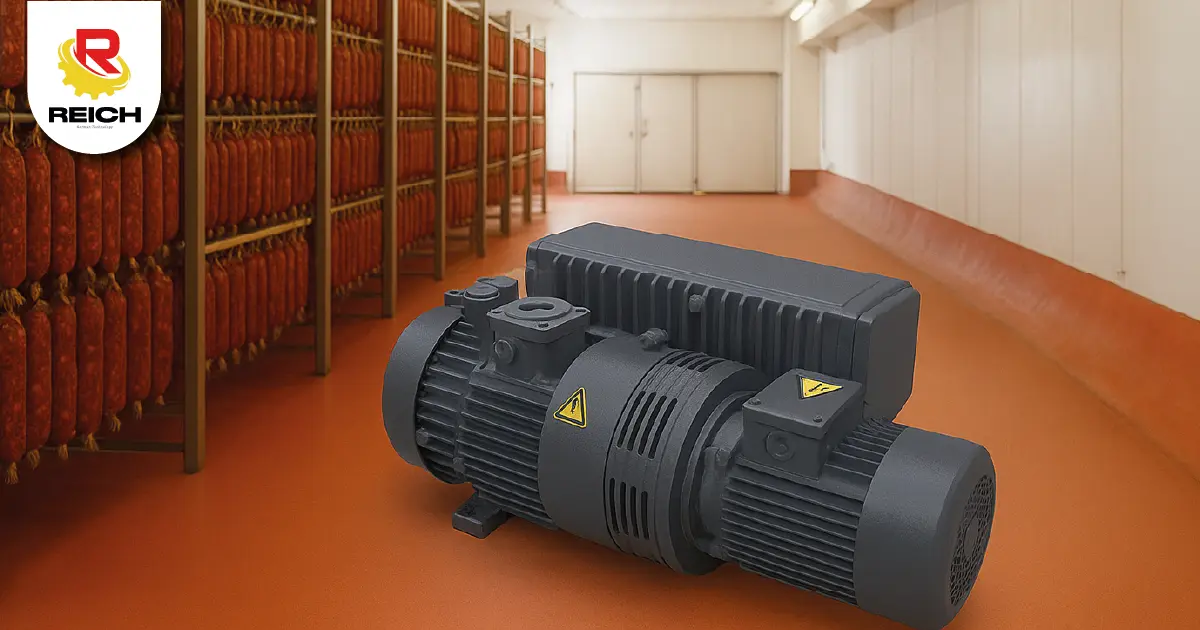
- Dry pumps (scroll or diaphragm): used in contamination-sensitive environments like pharmaceuticals and biotech.
- Diffusion or turbomolecular systems: required for critical applications such as biological lyophilization.
The choice of drying method and vacuum pump depends on four key factors: product characteristics, heat sensitivity, production scale, and desired final quality.
With versatile solutions including rotary vane, liquid ring, dry, and combined vacuum systems, Industria Techni Perú, backed by Reich’s German technology, supports companies in optimizing their drying processes ensuring efficiency, reliability, and world-class results.