Filters and Key Components for an Efficient and Reliable Vacuum System

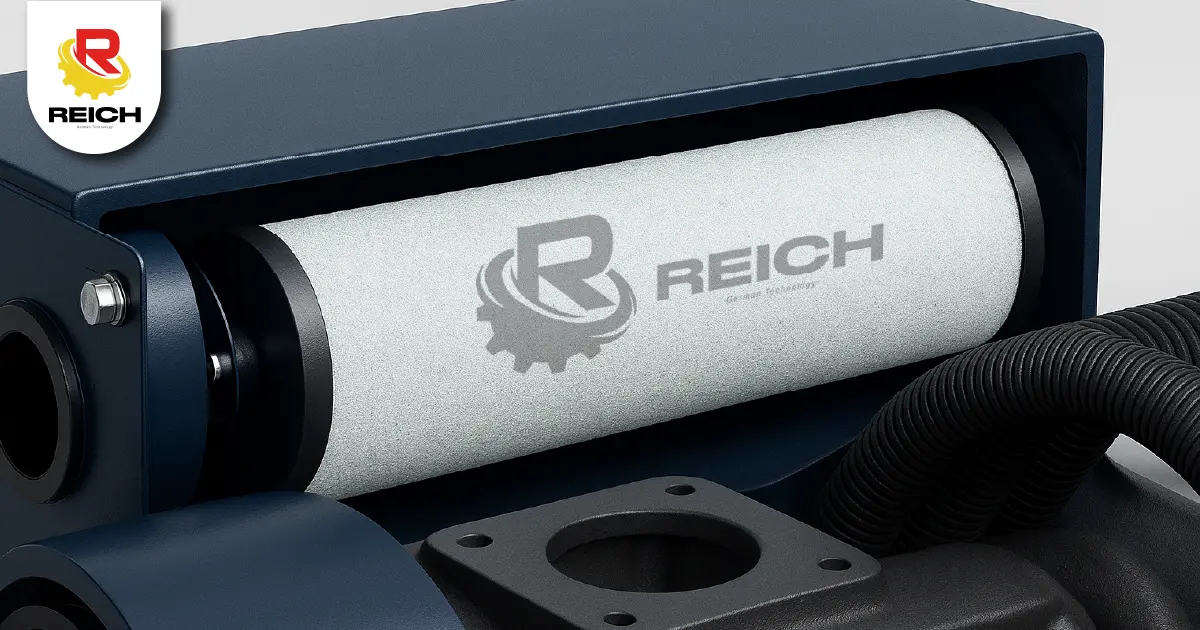
In a vacuum system, every component plays a strategic role in ensuring the equipment’s performance, efficiency, and durability. Among all elements, filters stand out as fundamental parts that protect the pump and prevent contamination during the production process. Proper selection and maintenance not only extend the system’s lifespan but also guarantee a stable, clean flow — avoiding unexpected downtime and high operational costs.
1. Importance of Filters in a Vacuum System
Filters act as a protective barrier for the vacuum pump, preventing solid particles, Filters act as a protective barrier for the vacuum pump, preventing solid particles, liquids, or contaminant vapors from entering the system. By keeping the airflow clean, they reduce internal wear, prevent leaks, and optimize overall performance.
A system equipped with well-designed and properly maintained filters operates more efficiently, consumes less energy, and requires fewer corrective maintenance interventions.
2. Types of Filters Used in Vacuum Systems
Inlet or Suction Filter:
Located before the pump, its main function is to block dust, debris, or contaminants that could damage the system. It is one of the most critical elements for extending the pump’s lifespan.
Oil Separator Filter:
Essential for lubricated pumps, this filter separates oil from air, preventing it from being released into the environment. It also helps maintain a stable and efficient vacuum pressure.
Exhaust or Discharge Filter:
This filter traps particles present in the exhaust air, preventing pollutants from being emitted and keeping the work environment clean.
Air (Environmental) Filter:
Used to ensure that the air entering the system is free from external impurities, improving the quality of the vacuum achieved.
3. Other Essential Components in a Vacuum System
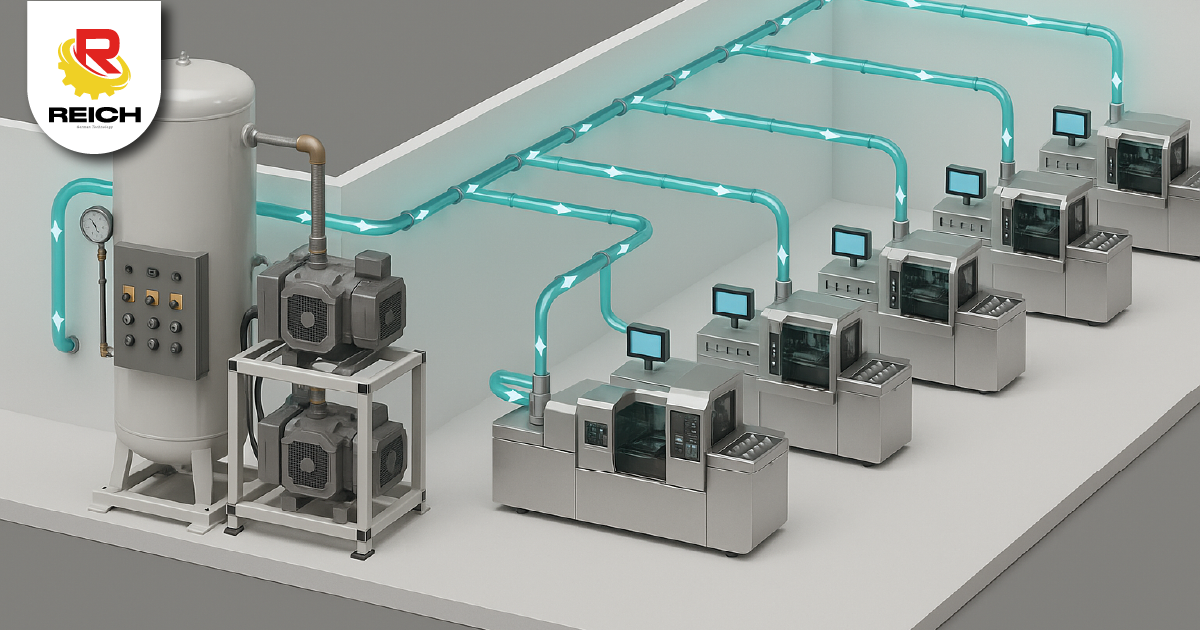
In addition to filters, there are several components that complement the system’s performance, such as:
- Check Valves: Prevent air or fluid backflow into the pump when the system shuts down.
- Condensate Traps: Capture liquids or condensed vapors that could affect vacuum pressure.
- Vacuum Hoses and Piping: Must be in good condition to avoid leaks and pressure loss.
- Gauges and Sensors: Allow monitoring of pressure and early detection of anomalies, enabling predictive maintenance.
4. Preventive Maintenance: The Key to Efficiency
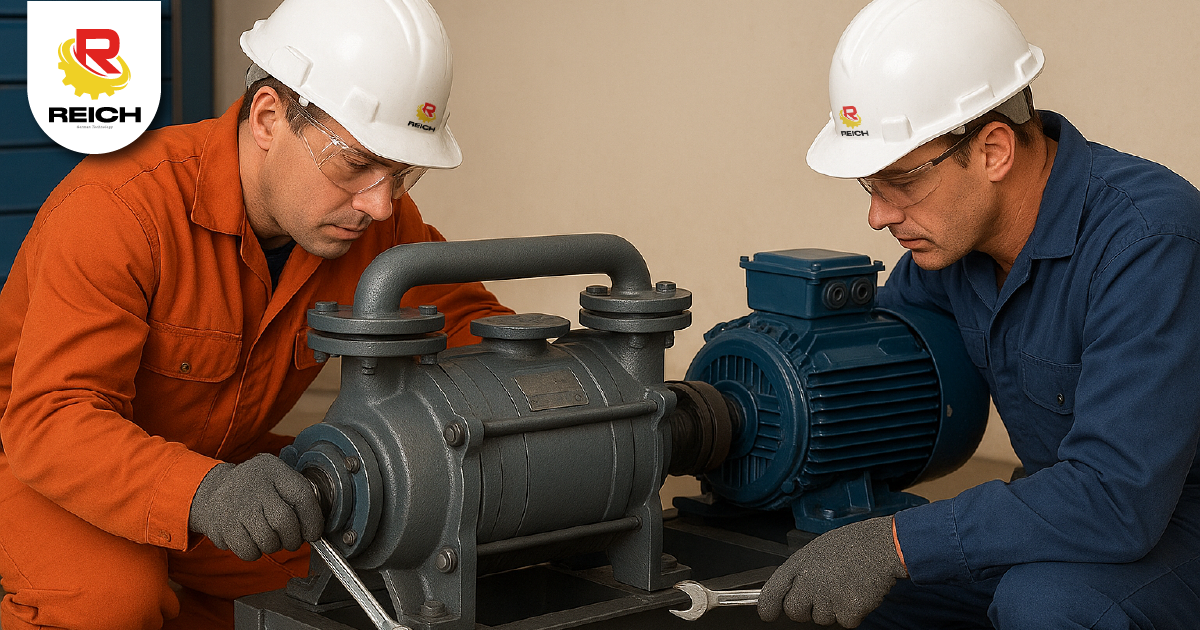
Regular maintenance of filters and components not only prevents costly failures but also optimizes energy consumption and ensures continuous operation.
Practical Recommendations:
Regular maintenance of filters and components not only prevents costly failures but also optimizes energy consumption and ensures continuous operation.
- Inspect filters weekly in demanding environments.
- Replace them according to manufacturer recommendations.
- Keep maintenance logs to identify wear patterns.
- Use original spare parts to ensure compatibility and durability.
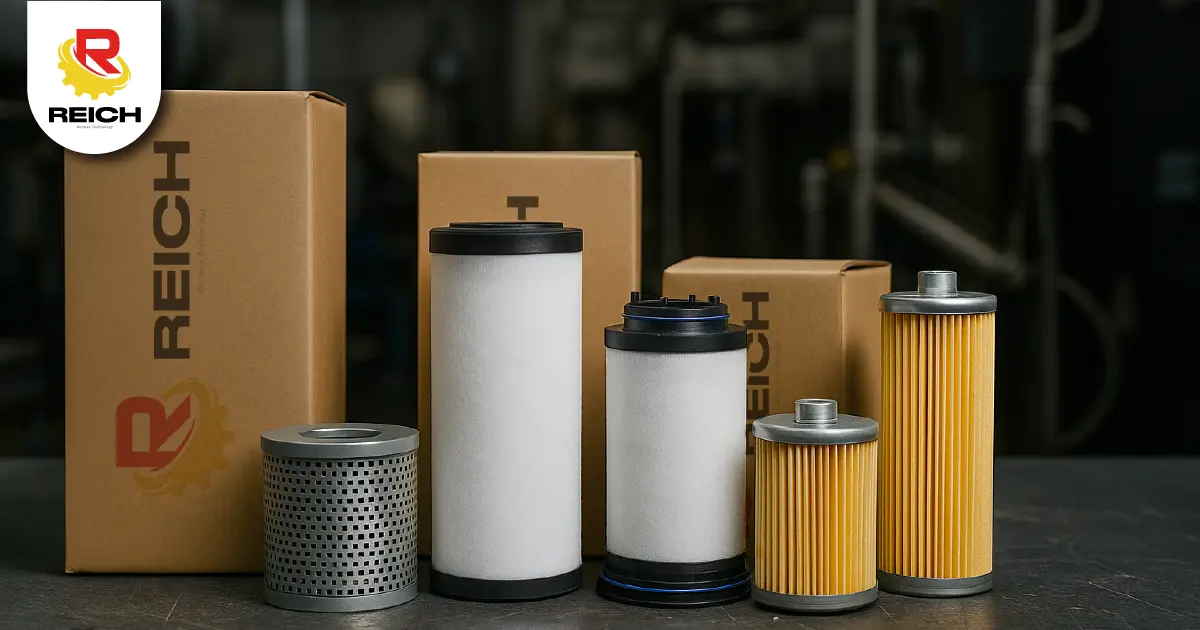
An efficient vacuum system depends largely on the quality and condition of its filters and internal components. Keeping them in optimal shape not only enhances operational performance but also reduces long-term costs and contributes to environmental sustainability.
At Reich, we offer genuine filters and spare parts from, engineered for high performance and maximum reliability.