Water Reuse in Liquid Ring Vacuum Pumps

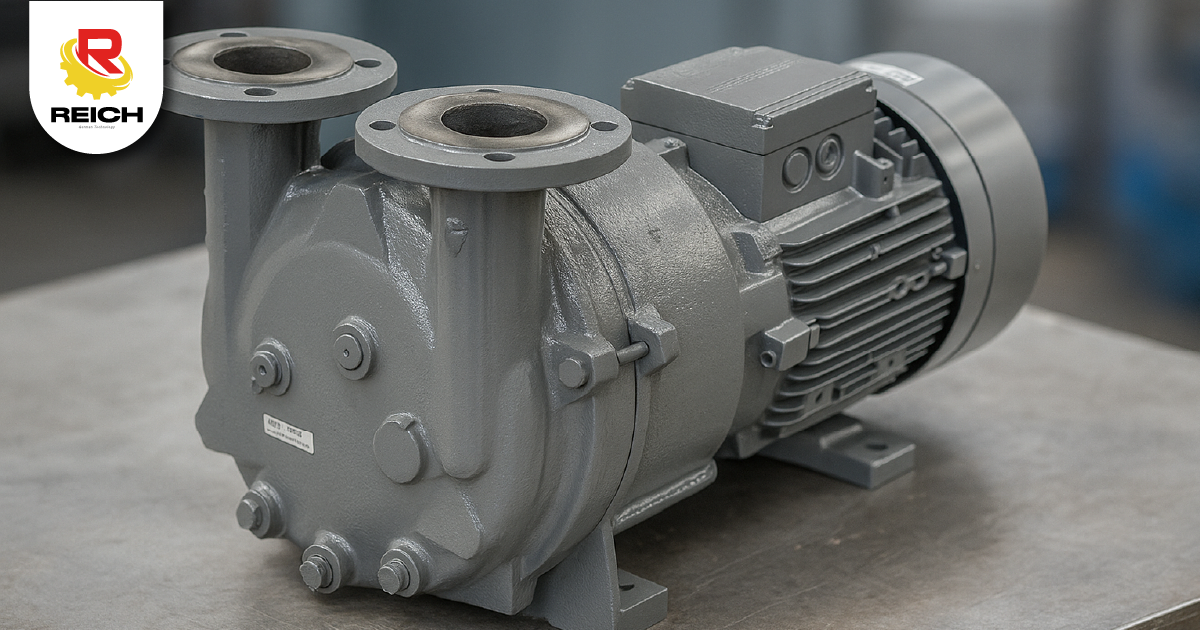
It is well understood that liquid ring vacuum pumps are cost-effective and that water seems inexpensive but let me show you the bigger picture. While water may appear cheap, it is not free. To operate a liquid ring vacuum pump in an open loop, a large amount of water is required. Switching to a closed loop involves tanks, recirculation pumps, filters, valves, flow meters, and other components. All of these demand both investment and space.
On top of that, the water heats up, becomes contaminated, and often needs replacement. Every water change means added maintenance time and extra costs. These are hidden energy expenses, as the pump not only moves the water but also generates vacuum. Furthermore, if water is not properly filtered and treated, it can cause corrosion, scaling, or even bacterial growth leading to more downtime and higher operational costs.
Methods of Water Reuse in Liquid Ring Vacuum Pumps
There are two main methods for water reuse: semi-closed loop and closed loop.
Semi-Closed Loop:
Reuses the water but injects fresh cooling water (as needed) through a thermostatic valve or electronically controlled valves and sensors to maintain the proper operating temperature.

Closed Loop:
Recirculates the working fluid and reduces its temperature through a heat exchanger (chiller), filters, and softeners—while also using the same control methods described above. This significantly reduces the overall consumption of the working fluid, preventing cavitation or overpressure. Automation via controllers and sensors minimizes both maintenance time and production downtime.

What is Required to Implement a Closed Loop?
Connection Identification:
- Vacuum Inlet: Connects to the process requiring vacuum.
- Vacuum Outlet: Releases gas and vapor; may be directed to a separator.
- Seal Water Inlet: Supply of fresh or recirculated water.
- Seal Water Outlet: Returns to the supply tank.
Design & Engineering Considerations:
Implementing a closed loop (side loop) is not as simple as connecting the outlet to the inlet. Key components must be included for safe and efficient operation:
- Recirculation Line: Routes liquid from the pump discharge back to the supply tank; must be sized for flow and pressure.
- Flow Control Valve: Regulates recirculated flow, ensuring optimal supply to the rotor.
- Heat Exchanger: Maintains the seal liquid at safe temperatures, preventing overheating and efficiency loss.
- Recirculation/Feed Tank: Stores and conditions the liquid; includes inlet filter, level indicator, and drain valve.
- Condensate Separator: Retains vapor and condensate from the suction gas, preventing cavitation and contamination.
- Instrumentation:
- Flow meter → ensures sufficient flow.
- Pressure gauge → monitors suction/discharge pressure.
- Thermometer → tracks liquid temperature.
- Relief Valve: Protects against overpressure or excessive flow.
- Piping Accessories: Elbows, tees, reducers, flanges, clamps, and seals designed for the working fluid.
Essential Calculations for Closed Loop Systems
In a closed-loop liquid ring pump, water is not wasted but reused within the system. For efficiency and safety, several key calculations must be performed:
- Seal Water Temperature Control:
Calculate flow rates and heat exchanger size to maintain safe temperatures.
Note: If water overheats, pump efficiency decreases and damage can occur. - Cavitation Prevention:
Ensure pressure and temperature conditions prevent the water from boiling inside the pump. - Proper Piping Sizing:
Define pipe diameters to minimize friction losses; account for bends, valves, and fittings - Flow Control Valve Sizing:
Dimension for precise flow adjustment, avoiding excess or insufficient seal water. - Recirculation Tank Sizing:
Ensure sufficient water storage for cooling, stabilization, and air/vapor separation. - Condensate Separator Sizing:
Prevents foam and bubbles from entering the recirculation loop. - Safety (Relief Valve):
Releases excess pressure to protect the pump and piping system. - Monitoring Instruments:
- Flow meter → verifies continuous circulation.
- Pressure gauge → confirms safe operating conditions.
- Thermometer → warns of overheating risks.
Reusing water in liquid ring vacuum pumps through semi-closed or closed-loop systems not only reduces operating costs by lowering water and energy consumption but also delivers significant environmental benefits by minimizing waste and contamination. When implemented with proper design and engineering, these solutions extend equipment lifespan, reduce maintenance downtime, and ensure more efficient, sustainable, and environmentally responsible operations.